The Simple Home: Why Luxury Homes Don’t Need Overcomplicated Technology
I've been designing technology systems for people's homes for over 30 years, the last 20 of them at Homeplay. In all that time, nobody has ever requested a complicated system.
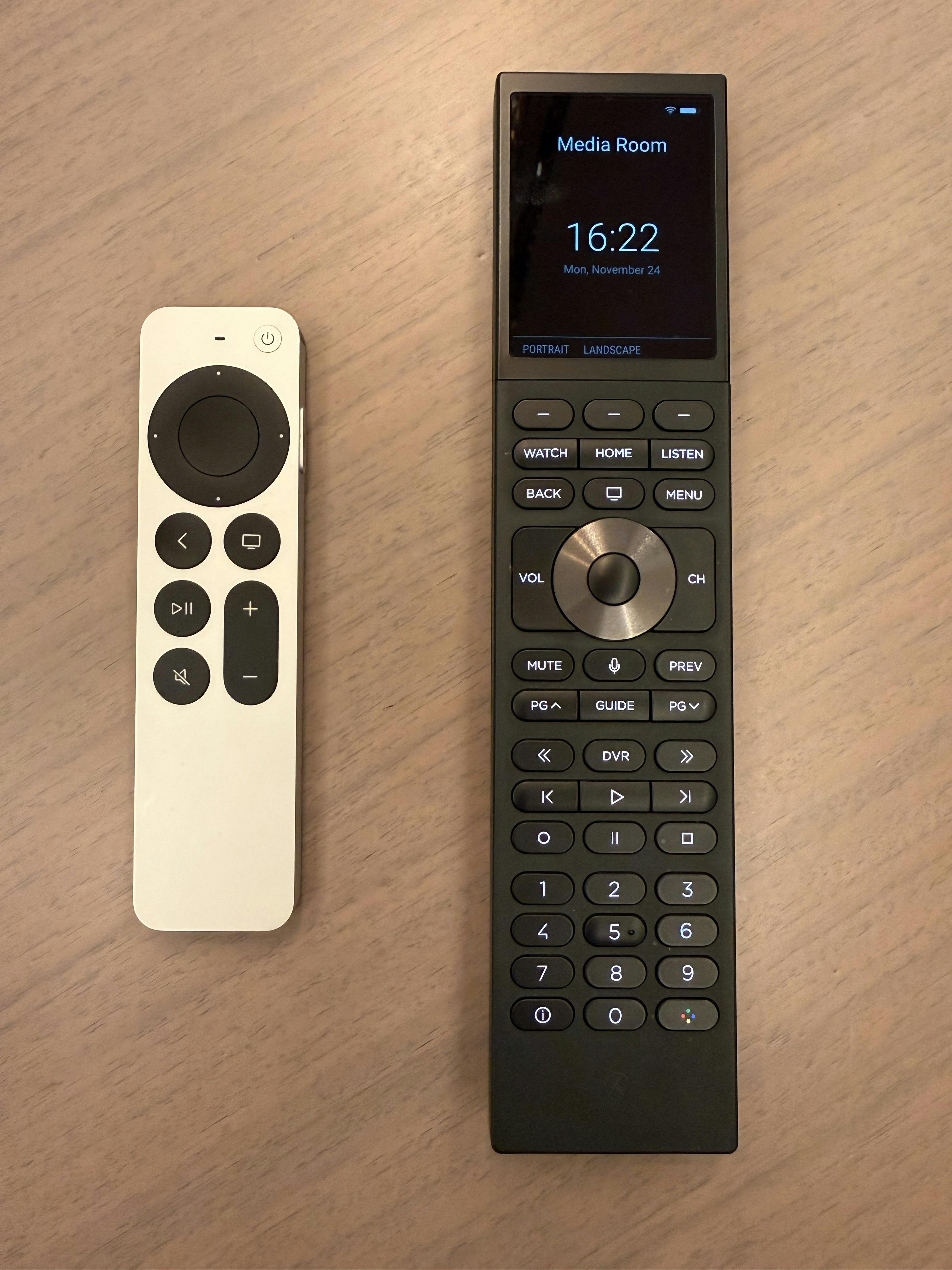
Which remote looks simpler to you?

My Epiphany
As my long-suffering wife will attest, I treat my own home as a test bed for new technology.
To avoid unleashing untested products on our clients, I live with every product we specify, wherever possible. That way, it doesn't just work on paper, but it actually delivers the experience promised.
For years, our family home relied on a high-end centralised video system: racks of gear feeding TVs across the house, controlled by expensive all-in-one remotes. At the time, this was the gold standard, the only way to deliver high-quality content to every room without the clutter. It was necessary and impressive engineering. But as technology evolved, what was once essential infrastructure became unnecessary friction. My mother-in-law, in particular, dreaded using the TV when she babysat.
Then, a technological shift made a new approach possible. We finally reached a point where high-end performance didn't require racks of hardware. It just required a tiny streaming box that we could fit behind the TV.
I tested Sky’s new ‘Stream’ platform and swapped the complex control system for the standard Sky remote. The next time we came home from a night out, my mother-in-law met me at the door, waving the clicker.
"James, I love this new remote! It's so easy to use."
She didn't know it was a new platform. She didn't care about the specs. She was delighted that she could turn the TV on without having to call me.
It was a small victory, but it changed my perspective completely.
The "Smart Home" Trap
I’ve never liked the term "smart home." To me, it reeks of gadgets. It suggests a house full of blinking lights and voice assistants that misunderstand you.
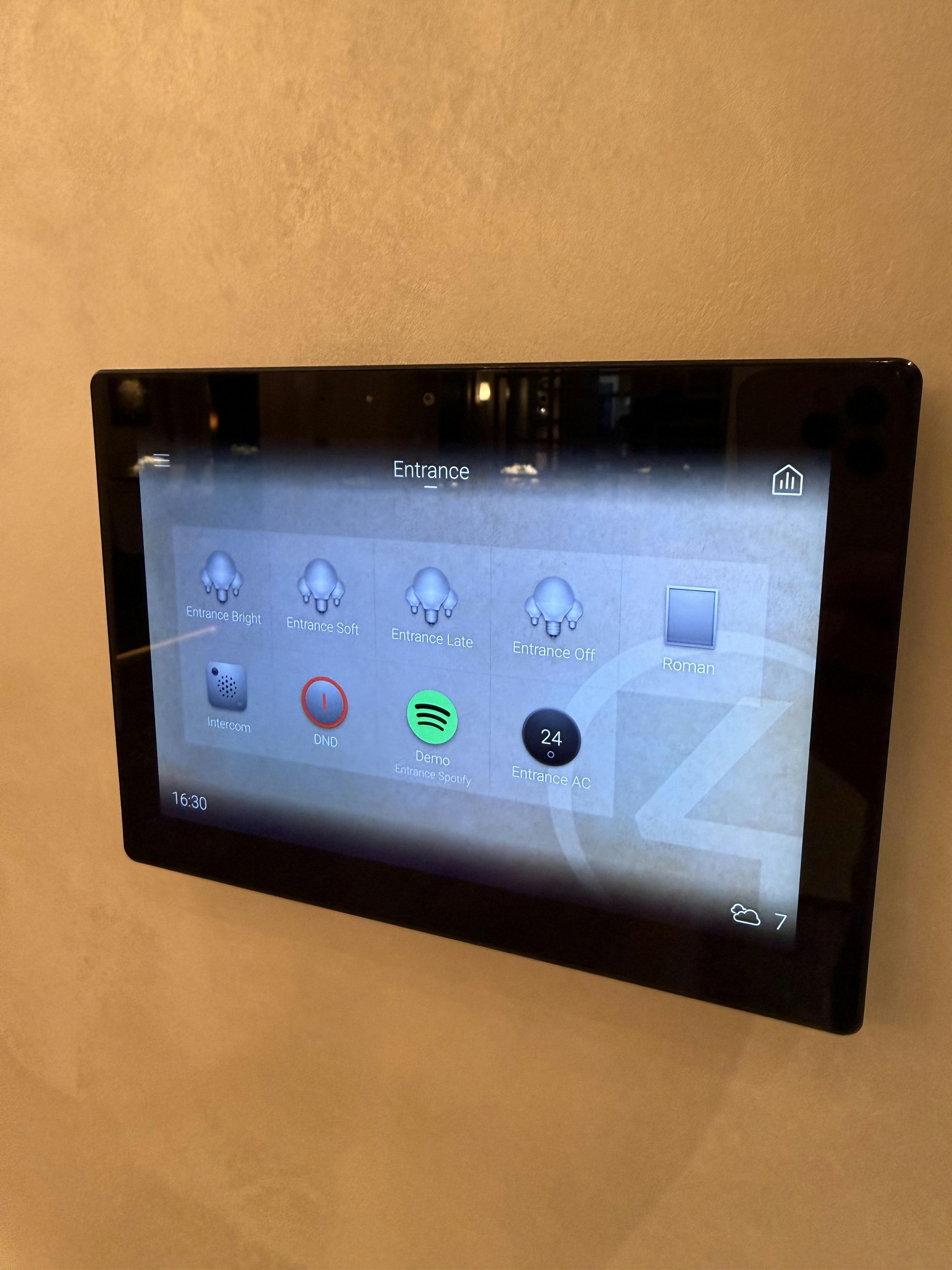
Yet, much of our industry is still chasing that narrative. They sell the idea that a luxury home must be run by a massive control system: a layer of complex hardware and software that sits between you and your home, trying to force every function (lighting, heating, music, security) into a single, unified wall-mounted touchscreen interface.
They focus on selling hardware. We focus on the experience.
At Homeplay, we call this The Simple Home.
“True luxury is being able to control your environment without having to think. Technology shouldn't get in the way; it should simply let you enjoy your home.”
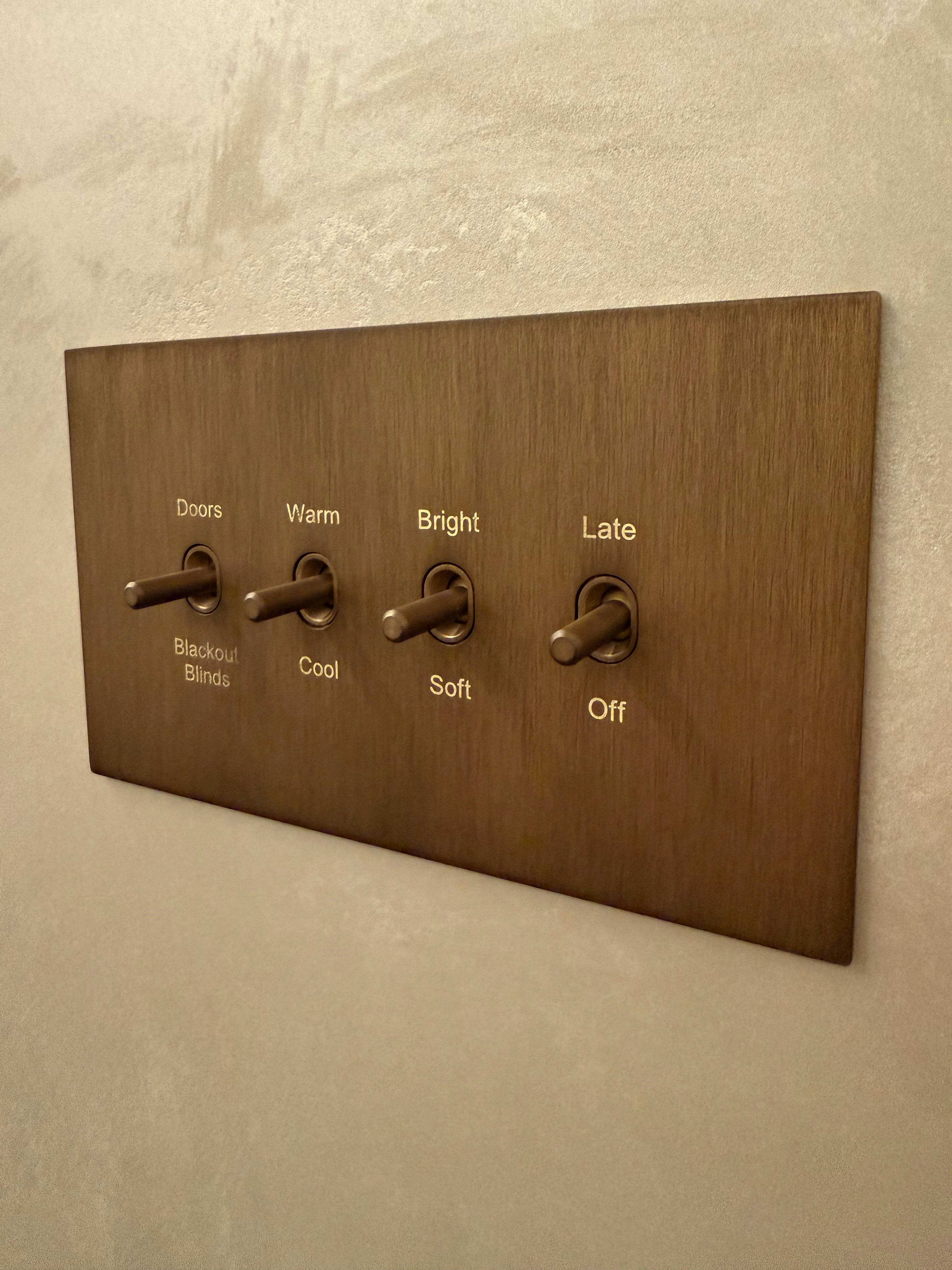
Simple, timeless, tactile controls

Luxury is about ease
The best homes aren't the ones with the most technology. They’re the ones with the right technology. They feel intuitive, calm, and beautifully designed.
When clients come to us, they aren't craving gadgets. They want feelings. They want beautiful lighting, tactile controls, seamless comfort, and invisible audio. True luxury is being able to control your environment without having to think.
So, rather than burning the budget on wall-mounted touchscreens or all-in-one remotes that require a manual to operate, we focus on the quality of the interaction. We invest in stunning lighting-control keypads, invisible loudspeakers, or a beautiful shading system that delivers joy and comfort every day.
When you think about all the technology interactions that you have in a home:
● Controlling the lighting
● Opening and closing blinds and curtains
● Controlling the heating and air conditioning
● Seeing who has arrived at the front gate
● Checking camera footage
● Putting some music on
● Watching TV
It's extremely rare that you ever want to do several of these things all at once. And when you do engage with them, you want the interface that is perfectly designed for that specific task. You don't want a half-baked proxy that offers a diluted version of the experience, which is often exactly what a control system gives you. To explain why, I use a simple benchmark.
The "Sky Remote" Test
A core philosophy of The Simple Home is using the best interface for the specific task.
Take the living room. When you're watching TV, you don't need a touchscreen with 50 buttons. You need a remote.
The Sky remote is arguably one of the best interfaces ever designed. It’s tactile, the voice search is incredible, it works instantly, and crucially, you already know how to use it.
Compare that to an integrated touchscreen remote. One feels like a premium consumer experience; the other feels like IT administration.
Then there is the "stone floor factor." If you drop your Sky remote on a hard kitchen floor, you can order a replacement for £30 and pair it yourself in seconds. You don't need to call us. If you drop a proprietary touchscreen remote, you are looking at a £1,000 hardware bill and a call-out charge for us to come and program it.
Real luxury is not having to worry about breaking the remote.
“It’s about creating spaces where the technology is so integrated, you barely notice it’s there - until you turn the music up.”
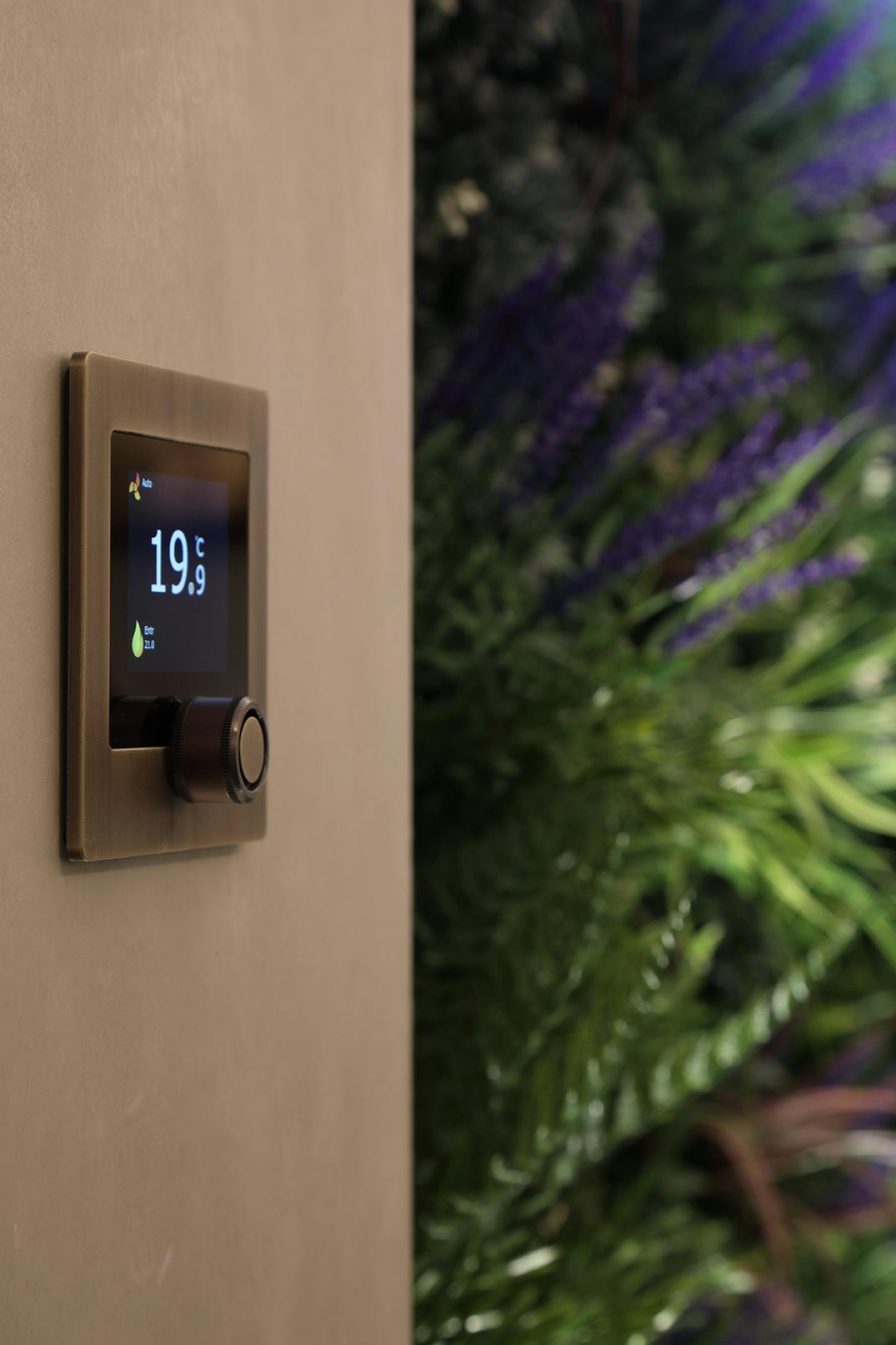
Clockwise for warm, anti-clockwise for cool

Let the user use familiar interfaces
Most of our clients prefer Spotify or Apple Music. These apps hold their playlists, their history, and their preferences. Ultimately, it is about giving them the choice to use what they like.
Forcing that experience through a third-party control system often results in a clunky, watered-down version of the app. Does it make sense to use a substandard music interface just in case you might want to check a security camera at the exact same moment? No. You should use the best tool for the job.
Since the vast majority of our clients use Apple devices, they already have the perfect tool for multi-room audio: AirPlay.
You might not even know you have it, but it changes everything. Instead of opening a complex "Home Control" app to play music, you just open Spotify (or YouTube, or BBC Sounds) on your iPhone. You tap the little speaker icon, choose "Kitchen," and the music plays.
There is no new app to learn. No friction. It just works the way you expect technology to work.
The Software Reality Check
There is a simple truth about software development that is often ignored: focus wins.
You cannot expect a control system manufacturer (typically a smaller company with limited resources) to build an app that competes with a global tech giant laser-focused on a single product.
Take Sonos. They are the world's largest home music system company, with vast teams dedicated entirely to making the music experience great. Meanwhile, a control system company is trying to build a single app that handles music, heating, lighting, security, gates, and intercoms simultaneously. It is ridiculous to expect their music interface to be better than the one built by the music company.
The same rule applies to security. If you want to scrub through footage to see an incident from yesterday, you almost always have to open the native camera app (like Unifi) anyway, because the control system integration is often too basic to handle timeline review.
So, we stop pretending. For the best experience, use the tool built for the job. Use the camera app for viewing cameras. Use Spotify to choose music. Use a beautiful lighting keypad to control lights.
It isn't a "fragmented" experience; it's a superior one.
“The best homes aren't the ones with the most technology. They’re the ones with the right technology. They feel intuitive, calm, and beautifully designed.”
This was cool... in 2010

"But I still need the house to work as one"
People often ask: "If I don't have a main processor, don't I lose the magic features?"
Not at all. We can still create those crucial "whole home" moments without overcomplicating the system.
For example, a common request is that the house should turn itself off when you leave. We can easily link the security system to the lighting system. When you arm the alarm, it tells the lighting system to go into "Away Mode" (turning off lights, lowering blinds, or simulating occupancy) and to turn off the music.
We don't need a complex computer to do this. Often, it is achieved with a simple "contact closure": literally just touching two bits of wire together electronically. It is bulletproof, instant, and practically free. You get the functionality you need without the fragility you don't.
Furthermore, manufacturers are increasingly integrating their products directly. For instance, UniFi cameras can now control Lutron lighting natively. If a camera detects a person in the garden at night, it can automatically trigger the exterior lights. Similarly, Sonos integrates directly with Lutron, allowing you to control music from your lighting keypads without any complex backend programming.
This connectivity used to require a complex central processor. Now, it’s simply built into the devices. These best-in-class products work perfectly together without the need for a third-party interpreter.
The myth of the "Welcome Home" scene
Control system manufacturers love to market a fantasy: You unlock the door, the lights fade up to 75%, the heating adjusts, and smooth jazz starts playing automatically.
It sounds great in a brochure. It’s annoying in real life.
Automation cannot predict your mood. Sometimes you walk in, and you want silence. Sometimes you’re on a call. Sometimes you have a headache. The Simple Home puts you in control, not your home technology integrator
“Ultimately, there is no single "right" answer. That's why we sit down with you and your professional team to discuss exactly how you live, before we recommend a single piece of technology.”
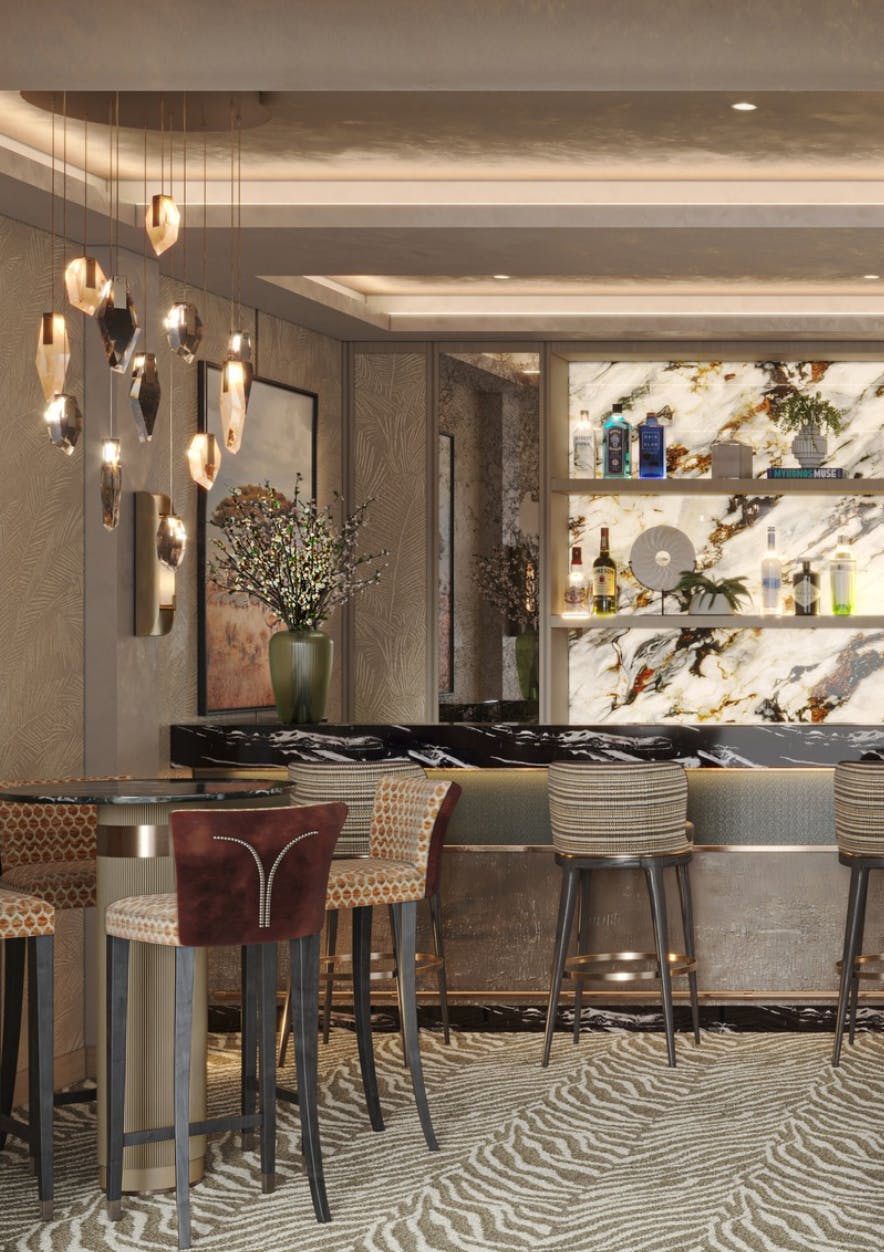
Technology should enhance a beautiful interior

When complexity is actually the correct answer
We aren't anti-control systems.
In fact, over the last two decades, we have won numerous global awards specifically for our complex, whole-home control system designs. We understand these systems deeply, and we operate at the highest level of the industry.
Because we understand control systems, we know precisely when they are necessary.
For example, if you have an open-plan entertainment space with a bar, a lounge, and a games area, and you want the same football match playing on multiple screens simultaneously, you absolutely need a centralised system. If you tried to do that with simple independent streaming boxes, you would get split-second latency (echo) between the screens, which makes the experience unwatchable.
Or on an extensive estate with a complex security system, the owner wants to quickly see a high-level floor plan showing which doors and windows are open and which are closed. A control system will do a great job of that.
Then there is the "global citizen" use case. Many of our clients have multiple homes, perhaps in London, the South of France, and New York. They don't want to learn three different cable TV interfaces or navigate three different streaming landscapes. A high-end control system abstracts that complexity. It presents a unified, identical interface in every single property, regardless of the local service provider. For these clients, the cost is irrelevant compared to the luxury of instant familiarity.
Finally, there is the power of personalisation. A sophisticated control system allows us to tailor the interface to the individual. For the "tech enthusiast" in the family, we can present a power-user dashboard with every granular setting available. But for a partner or guest who wants zero friction, we can present a radically simplified interface. If a client only ever watches Bloomberg in the morning, their profile can have a single button: "Watch Bloomberg." Everyone is different, and the technology should reflect that.
In cases like that, a control system isn't just a luxury; it is the only way to meet the requirement.
We still design, recommend, and install these high-performance systems whenever the use case demands it. But we don't default to them just because it's what the industry has always done.
Ultimately, there is no single "right" answer. That's why we sit down with you and your professional team to discuss exactly how you live, before we recommend a single piece of technology.
“We believe the industry is shifting. Clients are valuing effortlessness over excess. They want homes that feel natural and calm, not cluttered with gadgets.”
Beautiful lighting and shading is central to what we do


Simplicity allows for reliability
There is a selfish operational reason for this approach, too. Simplicity is transformative for support.
Troubleshooting a complex, layered automation system at 8 PM on a Saturday is a nightmare for everyone. But a Simple Home architecture? It rarely breaks. When it does, it’s easy to diagnose.
We also have to face the reality of modern software. We live in a world of constant updates that get pushed to our devices whether we like it or not.
In a complex, interconnected control system, a single update to a music player can break the entire home interface. But in a Simple Home architecture, that fragility is removed.
When giants like Lutron and Sonos build a direct integration, they test it relentlessly. They are massive companies that ensure their systems speak to each other perfectly before rolling out an update. They are far less concerned about whether that same update breaks a driver for a smaller third-party control system. By relying on these official, giant-to-giant integrations, your home is far less likely to break during an overnight update.
The result is a robust system where clients feel in control, and we aren't constantly fighting fires caused by broken drivers.
The Freedom to Tinker
Finally, there is the issue of ownership.
Most traditional high-end control systems are "dealer-locked." If you want to change a lighting scene, rename a room, or adjust a timer, you often have to call us (and pay us) to do it. The software is designed for engineers, not homeowners.
The Simple Home approach is different. Because we rely on best-in-class products like Lutron, Sonos, and UniFi, the software is designed for you to use.
If you want to change the kitchen lights to be warmer in the evening? You can just open the Lutron app and tweak it. If you want to change the name of a speaker? You do it in Sonos.
Of course, if you’d rather we handled it, we’re always here to help. But the point is that you have the choice.
It is a much more open, transparent way of living. It means you aren't tethered to your integrator for every minor adjustment. You actually own your system.

The Future is Calm
We believe the industry is shifting. Clients are valuing effortlessness over excess. They want homes that feel natural and calm, not cluttered with gadgets.
The Simple Home isn’t anti-tech. We still love massive, immersive sound systems that shake the sofa. But we believe the presence of the technology should be visually quiet.
It’s about creating spaces where the technology is so integrated, you barely notice it’s there, until you turn the music up. That is true luxury.
The Intelligent Estate Podcast
If you enjoyed this article and want to hear me talk about the subject in more depth, you can do just that by listening to 'The Intelligent Estate' podcast, linked here.
Thanks for reading!
James
The Intelligent Estate Podcast